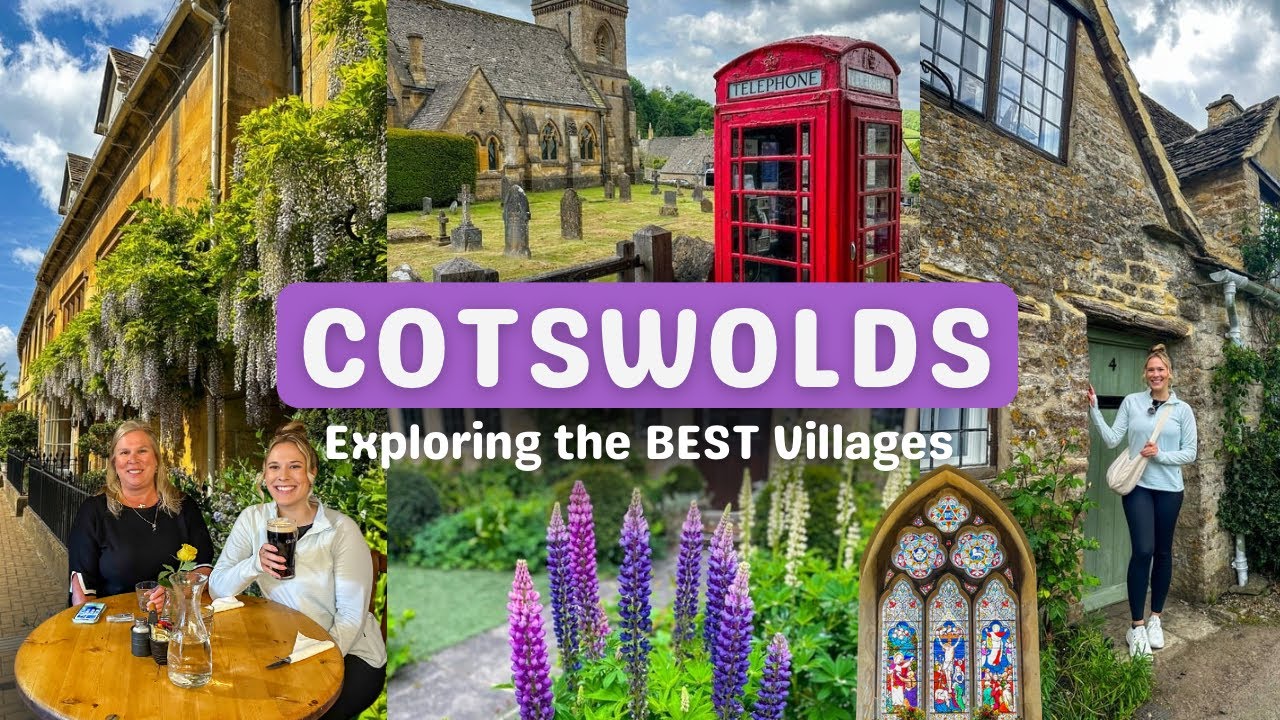
A few miles beyond London’s ring roads, the landscape softens. Fences turn to hedgerows, rail lines give way to sheep pastures, and limestone villages sit like honey-colored chess pieces on rolling green. The Cotswolds are close enough for a day trip, yet they run on their own clock. If you have only one free day, a guided tour can give shape to the meander: a driver who knows the lanes, a guide who knows where the light falls in late afternoon, and a handful of stories that make the stiles and steeples feel alive.
I have traveled these valleys in every season, with coaches, small vans, private cars, and more than once with an aging map and a rental whose sat-nav quit near Chipping Norton. Each method works, but the best Cotswolds tours from London share one trait: they trade box‑ticking for texture. You come back with less time on the A40 and more time face to face with place.
The shape of a good day
Most Cotswolds day trip from London schedules run eight to eleven hours, including travel. On a typical route, you might visit three or four villages, with one longer stop for lunch. The tempo matters. Two hours on foot is enough to notice how Stow-on-the-Wold’s marketplace slopes toward the stocks, to read the lichen on a 15th‑century lintel, to hear about the wool merchants who bankrolled these tall church towers. If your itinerary promises seven or eight stops, you will mostly see coach parking bays.
Guided tours from London to the Cotswolds fall into a few shapes. Small group Cotswolds tours from London, usually eight to sixteen guests in a minibus, give the guide freedom to pull over when a mist breaks on a ridge. Larger Cotswolds coach tours from London keep costs down and can move a crowd through highlights with efficiency. A Cotswolds private tour from London lets you follow your own nose entirely, a gift if you are chasing a family story or a bookish impulse. Luxury Cotswolds tours from London add polished touches, such as lunch in a manor hotel or a driver-guide with deep local connections. Affordable Cotswolds tours from London still find their way to the essentials if they manage time and traffic well.
How to visit the Cotswolds from London, practically
From central London, allow two to three hours each way by road, longer in summer Fridays and on bank holidays. Early departures help. I like leaving before 8 a.m., which gets you to Burford or Bourton when bakery windows still fog the glass. The return run can be slower; sheep do not care that you have a West End show at seven.
If you prefer rail, go Paddington to Moreton-in-Marsh, often about 90 minutes. From there, a local guide can meet you for a Cotswolds villages https://soulfultravelguy.com/article/london-tours-to-cotswolds-guide tour from London that feels more like countryside rambling and less like the M40. This hybrid approach suits travelers who get train-sick on coaches or want a later start.
The merit of London to Cotswolds tour packages is the handoff at each stage. Tickets, timetables, reservations, even a Plan B for rain, are sorted. If you drive yourself, you can certainly improvise. Just note that honeypot villages fill quickly from May through September, and parking can become a sport.
Villages that carry their own myths
The best villages to see in the Cotswolds on a London tour depend on the day’s light, your appetite for crowds, and whether the lambing is late. Some places hum with visitors, yet they hum for a reason. Others sit only ten minutes away but keep their quiet because there is no coach bay to fit forty seats.
Bourton-on-the-Water wears its river like jewelry. The low bridges stitch both banks together, and on clear mornings you can watch wagtails hop from parapet to parapet. Local guides tell a story about the footbridges being rebuilt by the same mason who carved a cherub in Stow’s porch, a likely fiction, but it gives you an eye for the chisels’ cut marks. If crowds thicken near the model village, a good guide slips you into back lanes behind Victoria Street where the scent of boxwood and woodsmoke lingers even in spring.
Bibury attracts with Arlington Row, a perfect slant of weavers’ cottages that now feature on passports and postcards alike. It is beautiful and, by late morning, heavily photographed. On my last visit, our guide carried a folded print of William Morris’s notes praising Bibury’s “picture-like grace,” then steered us to the mill race and told how workers once hung sheep fleeces on racks, letting the wind card them. The story made the postcard feel less staged.
Stow-on-the-Wold sits high and catches the wind. Its church door, fringed by yews, fuels the old claim that it inspired a certain fantasy novel’s elven gate. Most locals roll their eyes, but even they admit the door invites you to place your palm on the wood and wish yourself elsewhere. In the market square, a line in the paving marks the site of the stocks. There is an anecdote about a traveling cheese seller who supposedly escaped them by greasing his ankles with butter, which, true or not, makes it easier to imagine the roar of fair day.
Lower and Upper Slaughter remain two of my favorite stops. The river Eye is barely a thread, the mill wheel turns lazily, and the stones glow a softer gold than in Stow. Our driver once paused by the war memorial and pointed out names that repeat across families. His grandfather remembered the brothers who left the farm lane in 1916 and did not come home. After that, the walk to the ford felt different. This is the value of a guided visit: the landscape holds stories you only hear if someone trusted enough to share them is sitting up front.
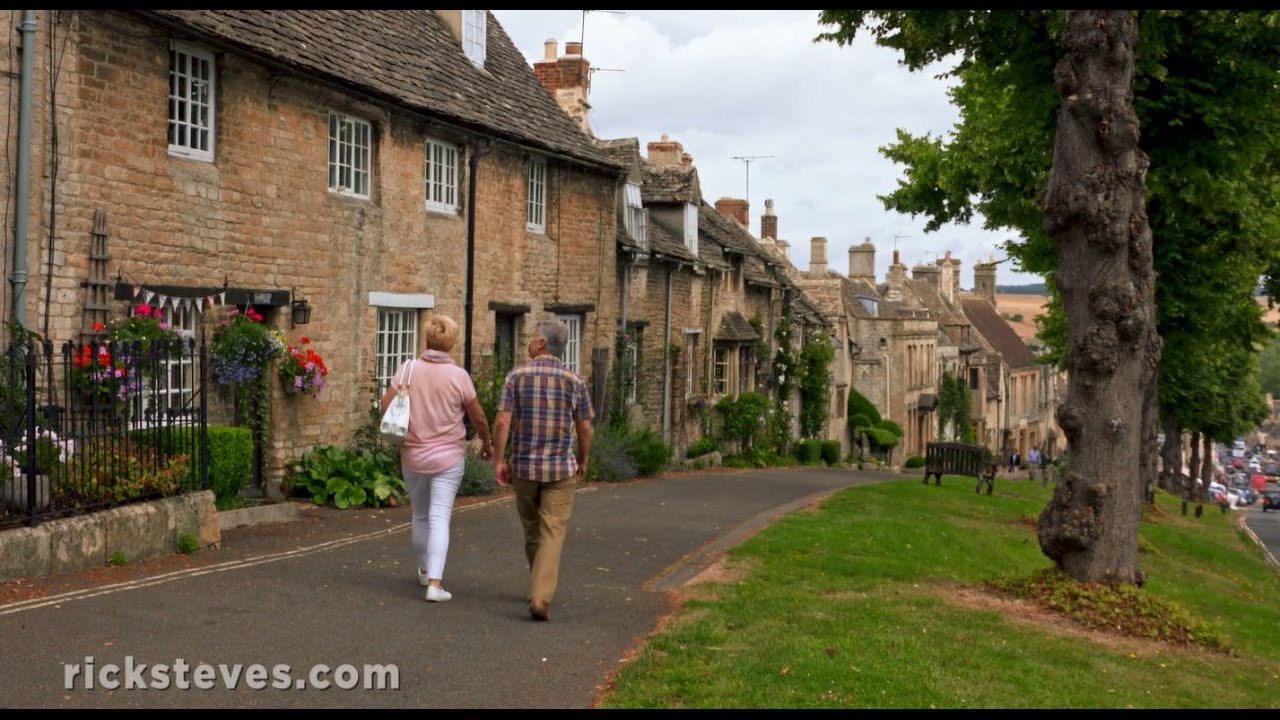
Burford works well as a lunch stop. The High Street drops toward the Windrush, and shop signs hang on iron brackets that look like they have not moved since Queen Anne. There is a modest legend about the Tolsey building having a resident ghost who rearranges ledgers after closing. The museum staff, with their usual dry humor, deny it. What Burford does have is a clutch of inns that treat pies like a craft. If a tour includes lunch here rather than a service station on the A40, you have chosen wisely.
Painswick carries a reputation for its churchyard yews, clipped into tall green rockets that line the path like sentries. An old belief says there are 99 yew trees and the devil prevents the hundredth. I have tried to count them more than once and always lose track near eighty. The locals simply smile and say the number changes after the rector’s second cup of tea.
Snowshill and Stanton, smaller and less trampled, repay a patient visit. They are harder for large coaches, which is why they stay magical. A small group can slip into a short walk on the Cotswold Way and trace drystone walls that have been mended by the same family for three generations.
Legends that color the lanes
Guides do not invent the Cotswolds’ charm, but they do curate it. A London to Cotswolds scenic trip can be a line on a spreadsheet until someone points out a feature that does not appear on maps.
On a winter tour we skirted Minchinhampton Common at dusk. Our guide stopped at a lay-by and asked us to step out. The wind was sharp, the sky a rind of orange. She told us about the wool trade fortunes, about cattle still grazing the common freely, about a lane locals avoid at night because they swear they hear hooves when no cattle are near. The sound could be anything, hoof echoes or just the imagination of those who have walked that path since childhood. It did not matter. When we drove on, the common felt charged.
Another guide in Broadway swore that a curfew bell once saved a baker from a disastrous batch. At nine, as the bell tolled, he returned to the oven to turn loaves and found a spark smoldering near the thatch. He doused it with a pail. Whether the story is strictly true is less important than what it says about the village and its rhythms. In places where the bell is still rung, you can feel time moving in rings.
And then there are the saints and sinners. In Winchcombe, Sudeley Castle houses the tomb of Katherine Parr, Henry VIII’s last wife, and the grounds carry their own trove of tales. A private guide with time to spare might steer you there for an hour, not to tick a royal box, but to walk the knot gardens and hear how the estate changed hands, sometimes painfully, across centuries. In the telling, the stones stop being pretty and begin to be human.
Choosing a tour that suits your day
Every traveler brings a different set of needs. A family with two children under ten will value space to run near a stream and a guide who keeps legend and fact in lively balance. A photographer might prefer a late start in winter to catch blue hour in the Slaughters. A foodie couple will want a lunch that is not on a tray.
For first-time visitors who want a Cotswolds sightseeing tour from London, I often suggest a small group. You get nimble logistics with enough flexibility for an unscheduled tea. If the van can fit on a narrow lane, you can pull into Upper Slaughter when the light looks kind. You also get the intimacy to ask questions. On one such trip, a guest asked about the color of the stone. Our guide pulled into a lay-by, plucked a small flake from a wall the mason had already set aside, and showed us the oolite grains that catch sunlight. That small moment would not happen on a forty-seat coach.
Cotswolds and Oxford combined tour from London packages can work if you accept that Oxford needs its own day to be more than a postcard. In a single day, expect a short city walk near the Bodleian and Radcliffe Camera, then one or two Cotswold stops. The trade-off: you touch two very different English stories in one sweep, from dreaming spires to wool towns. The cost: you will not linger. If you want a deeper rural feel, choose a full day in the hills.
For travelers who value comfort and time, luxury Cotswolds tours from London justify their price when the guide can open doors. A tasting at a vineyard outside Woodchester, a private look at a church’s rood screen, or simply an early entry to a garden before it opens to the public, are moments that turn a good day into a rare one. Not every operator can offer these, and not every guest wants them. Ask what “luxury” means: leather seats are less important than access.
If cost is front of mind, affordable Cotswolds tours from London through reputable operators still deliver. Check the ratio of time in the Cotswolds to time on the road, and read recent reviews for comments about pacing. A low price with a 6 a.m. pick-up and a 9 p.m. drop-off that spends only four hours off the motorway is not a bargain.
The logic of the road: routes that breathe
There is no single best path through the Cotswolds. That is the point. Still, some flows feel natural. From London, a northern arc might anchor on Stow, the Slaughters, and Bourton, with a later swing to Burford. A central route could visit Bibury, Northleach with its wool church, and Cirencester as a bigger market town for context. A western drift touches Broadway, Snowshill, and Stanton, with a view across to the Malverns if the air is clear.
Guides develop their own quiet tricks. One of mine, in high summer, reversed the usual order. We went first to Bourton, then to the Slaughters before ten, when the first surge of selfie sticks arrived. By lunch we slid to Stow, whose visitors disperse into antiques shops and tea rooms. In midafternoon, while the main roads clogged, we took a minor lane a tractor had kindly cleared of hedgerow trimmings and ended at a viewpoint no brochure mentions. That hour on the ridge felt like a gift.
London to Cotswolds travel options, compared briefly
For a day trip to the Cotswolds from London, three methods dominate.
- Coach tours: Cheapest per person, predictable, set routes. Expect efficient sightseeing with less flexibility. Good for travelers who want a simple, social day with clear timings. Small van tours: Mid-range price, nimble routing, closer commentary. Best for those who value time in villages over time at motorway services. Private driver-guide: Highest cost, complete control. Ideal for families, photographers, mobility needs, or travelers chasing a specific theme, from wool churches to film locations.
Family-friendly choices that keep the mood light
Family-friendly Cotswolds tours from London hinge on momentum, snacks, and places to roam safely. If you travel with children, ask your operator about short walks along streams, not just church interiors. In Bourton, the model village and the small motor museum break up the day. In Stow, a guide can turn a row of uneven stones into a game of history hopscotch. Some tour leaders carry laminated postcards or old photos to show a scene then and now, which helps younger guests feel the time travel.
Meal timing matters. Lunch at 12:15 keeps tempers even. In hot weather, seek a stop with a shaded green. In winter, book a pub that lights its fire early. I have taken families to Lower Slaughter in October purely to watch children paddle in wellies near the ford while parents sip tea from compostable cups. Nothing in the guidebook beats that memory.
When to go
There is no wrong season for London Cotswolds tours, only different shades of right. Spring brings lambs and wild garlic in the hedgerows. Summer dresses the valleys in the deep greens that sell calendars, but it also invites crowds. Autumn lends warmth to the stone and crispness to the air. Winter pares everything back until the line of a drystone wall becomes the day’s main event. Photographers adore November’s low sun. Garden lovers might prefer late May and June, when private gardens open and roses frame doorways in Burford and Bibury.
If you are booking a Cotswolds full‑day guided tour from London in peak months, look for operators who cap numbers and avoid noon arrivals at the most popular spots. Shoulder seasons, April and October, might be the sweet spot: fewer visitors, long enough light, and more time to hear your guide’s voice without the soundtrack of ten other tours.
Eating and drinking without losing time
Food on a day tour is not just fuel. It is how you slip into local life. A bacon bap on a bench in Stow can beat a white-tablecloth lunch if the sky is blue. That said, a well-chosen inn turns a schedule into a story. In Burford, several pubs treat cask ale with respect and cook pies with suet crust thick enough to stand a fork. In Broadway, tea rooms bake scones you may remember years later for their crumb and restraint with sugar.
Some London to Cotswolds tour packages include lunch. Read the fine print. A pre-ordered main can save forty minutes and let you spend that time by a river instead. If you want flexibility, choose a tour that allows you to buy as you go. Your guide will have a shortlist and a backup for days when the first choice is full.

Weather and what to bring
Cotswold weather is honest. It tells you what the sky intends, then changes its mind for five minutes and returns to plan. Even in July, mornings can be brisk on high ground. In February, a thaw at midday may leave lanes glossy by three. Dress in layers and wear shoes that forgive a garden path or a muddy verge. Your guide will handle umbrellas and ponchos for sudden showers. Sunscreen matters more than visitors expect. The wind can be quiet, the cloud thin, and the back of your neck unprotected during an hour by a ford.
Accessibility and pace
The older the village, the more it favors feet. Kerbs can be high, pavements narrow, and cobbles playful under wheels. If you have mobility needs, a Cotswolds private tour from London with an experienced driver-guide is the safest route. Many churches have ramps or level side doors, and some villages provide accessible toilets, but these are not universal. A good operator will plan stops with benches, flatter paths, and drop-offs close to the center.
Older travelers often worry about pace. Be frank with your operator. Ask how many walking minutes each stop requires and whether gradients are involved. Guides who have lived and worked here know which lanes tilt and which shops tolerate lingering without pressure to buy.
The difference a guide’s address book makes
Local knowledge is not just history facts. It is knowing that Mrs. Turner in Upper Slaughter sets out a tub of cut flowers by the gate on Thursdays, and if you ask politely, she will happily tell you which border plant is called London Pride and why. It is knowing the vicar in Painswick who will open the side chapel if asked with respect, or which farm track offers a legal footpath and which does not. On a London Cotswolds countryside tour with a seasoned guide, the day flows as if the county is ushering you through.
I have seen a driver pause the van to let a flock cross near Naunton, then use the minute to explain how sheep marks on rumps tell owners apart at a distance. I have heard a guide soften his voice in Northleach while we looked up at a vast hammerbeam roof, then share how wool merchants donated their fortunes to “wool churches,” creating vertical ambitions in sleepy towns. These granules of experience change the way you see the next lychgate or lintel.
Sample day that respects time and place
Imagine a departure near Victoria at 7:45 a.m. The city yawns. By 9:45, you turn off near Burford and take tea on the High Street, the kind that fogs your glasses when you sip. A walk to the church yields a glimpse of medieval brasses and a story about Leveller soldiers barricaded here in 1649. Not a lecture, just enough to ground your steps.
By 11:15, you reach the Slaughters. The mill stream murmurs. The guide waves you toward the ford with fifteen minutes to yourself and then gathers you for a lane that opens onto meadows. A thread of legend unfurls, not loudly, about a local boy who used to race toy boats downstream. It is probably a composite memory, but it fits.
Lunch around 12:30 in Stow or Bourton, depending on the crush. After, you drift through shopfronts and catch the scent of leather in a small workshop that still repairs old satchels. An hour here, unhurried. At 2:30, you slip to Bibury while some coaches are elsewhere. You stand across from Arlington Row and listen to the mill race while learning how waterside housing shaped the village. A final stop at a quiet overlook near Stanton gives the day a breath, not a sprint to the finish.
You reach London between 6:30 and 7:30, evening lights returning the city’s scale. You carry back names that will not fit on a postcard: eye, lea, wold. They fit in the mouth like stones in a wall.
Booking tips that avoid common pitfalls
- Check actual time on the ground versus drive time. Quality tours publish realistic stop durations and total walking minutes. Read recent, detailed reviews. Look for commentary on pacing, guide storytelling, and crowd management, not just star counts. Ask about group size caps and vehicle type. A 16-seat minibus moves differently than a 49-seat coach. Confirm seasonal tweaks. Good operators adjust routes for harvest traffic, garden openings, and village events. Clarify inclusions. Entry fees, lunch, tips, and hotel pick-ups vary across London to Cotswolds tour packages.
Edges and trade-offs
Cotswolds villages can charm you into thinking they are stage sets. They are not. People live here, drive tractors through the same lanes you photograph, and stack wood by the same doors you admire. A guide worth the fare will slow a group, lower voices near cottage windows, and set a tone of respect that residents feel and often return in kind.
Speed is the enemy. A rushed Cotswolds villages tour from London can give you the look without the feel. Yet linger too long in one place and you lose the broader sweep of the wolds’ geology, the way limestone shelves tilt and villages cling to them. The art lies in balance. A small group lets you linger without sinking the day. A coach makes scale possible, then demands discipline.
Combining Oxford with the Cotswolds spreads the butter thin. It is feasible, and some travelers love the contrast, but accept that you will taste, not feast. Winter shortens daylight, which shortens photography windows. Rain happens. The right guide treats it like weather, not disaster, and swaps a riverside walk for a church interior with a story about a window put back together after the Civil War.
Why these stories last
The Cotswolds are not a monument you climb once. They are a conversation. The talk passes through time, from a mason’s mark on a quoins to a bell that still rings the curfew in a world of smartphones. Guided tours are not the only way to hear that conversation, but they are a good way to join it quickly and to leave with more than photos.
If you choose a Cotswolds sightseeing tour from London, choose one that makes space for this: a guide’s anecdote that ties a place to a person, a detour for weather and mood, a lunch that tastes of where you are. Whether you come by coach, small van, or private car, let the day move at the village’s speed. Legends will find you if you give them time. And when you return across the ring roads, the city will feel sharper somehow, as if looking across the wolds taught your eyes a new way to measure distance and light.